United Tax Liens

Why Quiet Title Is Essential After a Tax Sale

When you buy property through tax lien or tax deed investing, ownership is not always as clean as it seems. You may have the deed, but that does not always mean you fully own the property in a legal sense.

That’s where the quiet title process comes in.

Clear ownership is built, not assumed.

A quiet title action is a legal process that clears up any problems tied to a property’s title. After a tax sale, there may still be old claims attached to the property. These can come from previous owners, lienholders, or even unknown parties. Even if those claims are weak, they can still create risk.

Until those issues are cleared, the property is not considered fully “marketable.” That means selling it can be harder, and getting title insurance may not be possible.

The quiet title process fixes this. An attorney files a lawsuit that names all possible parties who could have a claim. These people are notified and given time to respond. If no one comes forward—or if claims are resolved—the court issues a final judgment. This judgment clears the title going forward.

Once that happens, the property becomes much easier to sell.

This step is important because most buyers—and almost all lenders—want title insurance. Title companies usually will not issue a policy unless the title is clean. Even though it is rare for someone to challenge a tax sale, the risk still exists. Quiet title removes that risk.

From an investor’s point of view, this is a key step. Buying the property is just the beginning. The real value comes when you can sell or use the property without legal issues. Quiet title is what makes that possible.

The process does take time. It also costs money, since you will need an attorney. But skipping it can cause bigger problems later. A property with unclear title can sit unsold or require a discount to move.

In the end, successful investors understand this: getting the deal is only step one. Turning that deal into clear, usable ownership is what creates real profit.

This blog is for informational purposes only and should not be relied upon as financial or investment advice. Real estate investing carries risks, and individual results will vary. Always consult with your team of professionals before making investment decisions. The authors and distributors of this material are not liable for any losses or damages that may occur as a result of relying on this information.

If you are researching tax lien investing, one of the first things you need to understand is that not every state in the United States operates the same way. The rules, interest rates, redemption periods, and auction structures vary significantly depending on where you invest. Before you place a single bid, you need to know which states sell tax lien certificates, how each one works, and what that means for your returns.

This guide breaks down tax lien certificate states, explains how the system works, and gives you the information you need to choose your first market with confidence. If you want a broader introduction to how the investment model works before diving into state-by-state details, the team at United Tax Liens provides structured resources for investors at every level.

Understanding Tax Lien States vs. Tax Deed States

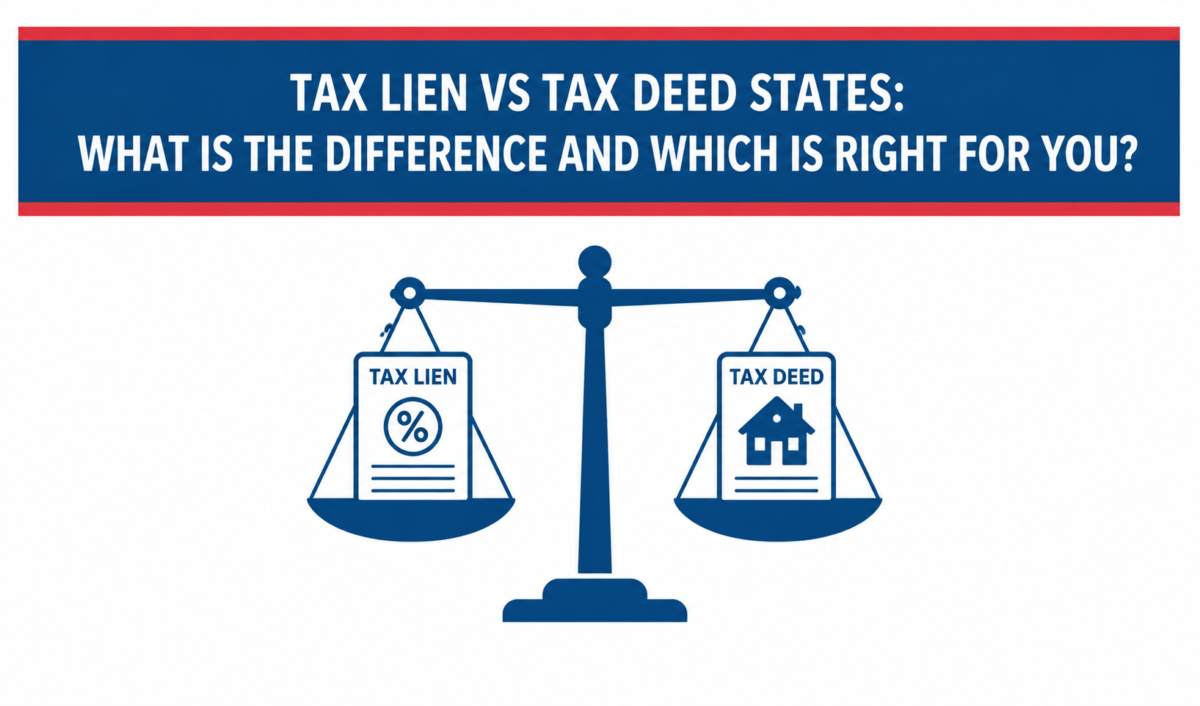
The United States is divided into three categories when it comes to how governments handle delinquent property taxes: tax lien states, tax deed states, and hybrid states that use elements of both systems. Understanding which category a state falls into is the starting point for any investor.

What Is a Tax Lien State?

In a tax lien state, when a property owner fails to pay their property taxes, the local government places a legal claim on the property and sells that claim to investors at a public auction. The investor pays the outstanding tax debt and in return receives a tax lien certificate that earns interest while the property owner works to repay the debt.

The investor does not take ownership of the property immediately. Instead, they hold the certificate during a legally defined redemption period and collect interest when the owner pays the debt back. If the owner never pays, the investor may eventually gain the right to foreclose. This is the core model that platforms like United Tax Liens are built around.

What Is a Tax Deed State?

In a tax deed state, the government skips the certificate step. When property taxes go unpaid, the government eventually seizes the property and auctions it off directly. The investor buys the property itself rather than the debt claim. This is a fundamentally different investment model that involves more capital, more risk, and a different due diligence process.

Hybrid States: Tax Lien and Tax Deed Combined

Some states use a combination of both systems. These are commonly called redeemable deed states. The investor purchases a deed to the property, but the original owner still has a window of time to reclaim it by paying the debt plus penalties. Georgia and Texas are the most commonly cited examples of this hybrid approach.

Understanding whether you are looking at tax lien and tax deed states, or a pure version of either, directly affects how you should evaluate opportunities. The United Tax Liens blog covers these distinctions in detail for investors who want to go deeper.

The Complete List of Tax Lien Certificate States

The following states are classified as tax lien states where investors can purchase certificates at public auctions. Each state has its own rules for interest rates, redemption timelines, and auction formats.

Alabama

Alabama is a tax lien state with interest rates that can reach up to 12% annually. Auctions are held at the county level, and the redemption period is typically three years. The state offers a relatively accessible entry point for newer investors.

Arizona

Arizona is consistently ranked as one of the most investor-friendly tax lien states in the country. The state caps interest rates at 16% and runs well-organized county-level auctions. The redemption period is generally three years. The legal framework is clear, the auction process is transparent, and the market is large enough to find quality opportunities across multiple counties.

For investors looking to understand what structured investing in markets like Arizona actually looks like in practice, reading real investor testimonials can help set realistic expectations.

Colorado

Colorado uses a premium bidding system where investors compete by bidding a premium above the tax debt. The base interest rate is set by the state. Redemption periods vary by county, and the state has a strong legal framework for certificate holders. Colorado can be competitive in urban markets like Denver but less saturated in rural counties.

Florida

Florida is one of the most active tax lien certificate states in the country. Most counties conduct fully online auctions, making it accessible to remote investors across the United States. Interest rates can go up to 18%, and auctions are held on a regular and predictable schedule throughout the year.

The combination of high inventory, online access, and predictable processes makes Florida a popular starting market. The Tax Lien Wealth Builders services page includes educational content on navigating high-volume markets like Florida.

Illinois

Illinois stands out in the tax lien states list for its high interest rate ceiling. The state allows returns of up to 36% through a penalty-based system. The auction format in Illinois is bid-down interest, meaning investors compete by offering the lowest rate they are willing to accept.

Illinois redemption periods are typically two to three years. The high rate potential attracts competition, particularly in Cook County and the Chicago metro area. Investors who want to target Illinois markets benefit from education resources at Tax Lien Wealth Builders before placing bids in high-competition environments.

Indiana

Indiana holds its tax lien auctions annually in the fall. The state has a bid-down interest rate system with a ceiling of 10% to 15% depending on the year and county. Redemption periods are typically one year, which gives investors faster liquidity compared to states with longer timelines.

Iowa

Iowa is a tax lien state with a fixed interest rate structure. The state sets a maximum rate and auctions are conducted at the county level. Iowa tends to be less competitive than larger states like Florida or Illinois, which can benefit investors who do thorough research on rural markets.

Kentucky

Kentucky has a relatively straightforward tax lien process. The state conducts county-level auctions and offers redemption periods that typically extend to two to three years. Interest rates are competitive and the legal framework is well-defined.

Maryland

Maryland operates a competitive tax lien auction system with interest rates that vary by county. Baltimore City and Montgomery County tend to attract significant investor interest due to property values and inventory. The state has a redemption period of up to two years and requires careful legal compliance during the foreclosure process.

Mississippi

Mississippi is a tax lien state with auctions held annually at the county level. Interest rates and specific procedures vary by county, and redemption periods typically extend up to two years. The state is less commonly discussed in national investor circles, which can mean less competition in some markets.

Missouri

Missouri combines both tax lien and tax deed opportunities depending on the county. Some counties sell certificates while others move directly to tax deed sales. Investors need to understand the specific rules for each county they target.

Montana

Montana is a tax lien state with interest rates set at a flat percentage by the state. Auctions are held at the county level and the redemption period is typically five years, which is longer than most states. The extended timeline means more interest accrues, but capital is tied up for a longer period.

Nebraska

Nebraska conducts online auctions in most counties and offers a competitive interest rate structure. The redemption period is typically two to three years, and the state has a clear legal framework for certificate holders.

New Jersey

New Jersey uses a premium bidding auction system. Investors compete by offering the highest premium above the tax debt, and the interest rate is fixed by state law at up to 18%. New Jersey also allows what is called a subsequent lien, where the investor can pay future tax bills on the same property and add them to the certificate.

New Jersey has a strong foreclosure process for investors, but it requires strict legal compliance and attention to timelines. The United Tax Liens coaching program can help investors understand how to navigate complex state systems like New Jersey's.

North Dakota

North Dakota is a tax lien state with a straightforward auction process. The state has a redemption period of up to three years and offers predictable legal procedures for investors.

Ohio

Ohio auctions are held at the county level and vary in format across the state. Some counties use online platforms and some conduct in-person auctions. Interest rates and timelines vary by county, making research essential before committing capital.

Oklahoma

Oklahoma is a tax lien state with annual auctions. The state has a redemption period of two years and offers competitive interest rates. Oklahoma's markets tend to be less saturated than coastal states.

South Carolina

South Carolina is considered a hybrid state that leans toward the tax lien model. The state auctions delinquent tax obligations and provides a one-year redemption period. The high penalty rates can make South Carolina attractive to investors who want faster liquidity.

South Dakota

South Dakota holds annual tax lien auctions with interest rates that can reach competitive levels. The state has a relatively simple process and clear legal framework.

West Virginia

West Virginia conducts annual tax lien auctions with a redemption period that can extend to several years. The state has a mix of urban and rural markets, and research is essential to identify quality opportunities.

Wyoming

Wyoming is a tax lien state with a straightforward auction process. The state has a redemption period of four years and fixed interest rates, making it a longer-term investment market.

Ready to explore which tax lien markets are right for your investment goals? Contact a United Tax Liens coach to get personalized guidance based on your budget, timeline, and risk tolerance.

Tax Deed States: Where the System Works Differently

For completeness, it is worth knowing which states do not sell tax lien certificates and instead conduct tax deed sales. In these states, investors buy the actual property rather than the debt certificate.

States That Use Tax Deed Auctions

The following states are primarily tax deed states: Alaska, Arkansas, California, Georgia (redeemable deed), Hawaii, Idaho, Kansas, Maine, Michigan, Minnesota, Nevada, New Mexico, New York, North Carolina, Oregon, Pennsylvania, Tennessee, Texas (redeemable deed), Utah, Virginia, Washington, and Wisconsin.

If you are specifically interested in tax lien certificate investing rather than property acquisition, these states are generally outside the scope of your strategy. The United Tax Liens blog breaks down the distinctions between these systems in more detail.

Why the Distinction Matters for Investors

Many beginner investors search for tax lien states list resources without realizing that the state they are interested in may actually be a tax deed state. Getting this wrong before your first auction can mean researching properties, registering for auctions, and investing time in a market that does not match your investment model.

Before committing to any market, verify the classification directly through the county tax office or with an educational resource like Tax Lien Wealth Builders, which covers state-by-state rules as part of its investor education system.

How to Evaluate Tax Lien States as an Investor

Once you know which states sell tax lien certificates, the next step is evaluating which ones are the right fit for your investment strategy. Not every tax lien state is equally accessible, competitive, or profitable for every type of investor.

Interest Rate Ceilings

Interest rate ceilings vary significantly across tax lien certificate states. Illinois tops the list at 36%, while states like Wyoming and Indiana sit closer to 10% to 15%. However, a higher rate ceiling does not automatically mean higher returns. In highly competitive markets, bid-down auctions often push actual rates far below the legal maximum.

Investors who want to understand the relationship between rate ceilings and actual auction outcomes should explore educational resources at United Tax Liens before selecting a primary market.

Redemption Period Length

Redemption periods determine how long your capital is tied up before you receive repayment. Montana has one of the longest at five years, while Indiana and South Carolina offer shorter timelines closer to one year. The right redemption period depends on your liquidity needs and how quickly you want to recycle capital into new investments.

Auction Format: Bid-Down vs. Premium Bidding

Tax lien states use two primary auction formats. In bid-down interest states like Illinois and Florida, investors compete by offering the lowest interest rate they are willing to accept. In premium bidding states like New Jersey and Colorado, investors compete by offering the most money above the tax amount owed.

Each format affects your return calculation differently. The United Tax Liens services page outlines how these auction dynamics affect investment outcomes for different types of investors.

Market Competition Levels

Some tax lien states, particularly Florida and Illinois, attract institutional investors and well-funded bidders who drive competition in major counties. This competition reduces returns for individual investors who do not have strategies to compete effectively. States with less national visibility can offer better opportunities for self-directed investors who do their research.

Legal Complexity and Foreclosure Procedures

If a property owner never redeems the lien, the investor may need to initiate foreclosure proceedings to claim the property. The legal process for doing this varies enormously by state. Some states have streamlined procedures, while others require court filings, waiting periods, and attorney involvement that can take years.

Understanding the foreclosure path in your target state before you bid is not optional. The team at United Tax Liens can connect investors with resources that clarify the legal process for different markets.

Not sure which state fits your situation? Browse the United Tax Liens services page to learn more about how structured investment guidance works.

Tax Lien Rates by State: What the Numbers Actually Mean

One of the most searched topics in tax lien investing is tax lien rates by state. Investors naturally want to know where the highest returns are available. But the interest rate ceiling is only one part of the return equation.

The Gap Between Legal Maximum and Actual Auction Rate

In a bid-down interest state, the legal maximum is the starting point, not the outcome. If twenty investors are competing for the same certificate in a Florida county, the rate will be bid down far below the 18% maximum. The actual rate achieved depends on how many investors are competing and how aggressively they bid.

In premium bidding states, the premium paid at auction is a direct cost that reduces your effective return. If you pay a $500 premium on a $2,000 lien at a fixed 18% interest rate, your actual return on invested capital is lower than the stated rate suggests.

State Interest Rate Summary

Here is a practical overview of interest rate ceilings across major tax lien certificate states:

  • Illinois: up to 36% (penalty-based)
  • Florida: up to 18%
  • New Jersey: up to 18%
  • Arizona: up to 16%
  • Indiana: up to 15%
  • Colorado: state-set base rate plus auction dynamics
  • Montana: fixed state rate over a four to five year period
  • Iowa: fixed rate with county-level variation

For current and verified rate information by state, the Tax Lien Wealth Builders blog publishes updated state-by-state breakdowns for active investors.

Factoring In Time and Liquidity

A 36% rate over three years on a small lien may produce a smaller total dollar return than a 16% rate that redeems in six months on a larger certificate. When evaluating tax lien rates by state, always calculate the total return on invested capital over the actual expected timeline, not just the annual rate ceiling.

Practical Steps for Getting Started in a Tax Lien State

Once you have identified target states, the path from research to first investment involves several practical steps that every new investor should understand before participating in their first auction.

Step 1: Verify the State Classification

Confirm that your target state is a tax lien state before investing any time in county-level research. State classifications can be confirmed through the county tax assessor or treasurer office website, or through investor education platforms like United Tax Liens.

Step 2: Research County-Level Rules

Even within a tax lien state, rules vary by county. Some counties within the same state may run online auctions while others require in-person attendance. Registration requirements, deposit amounts, and auction schedules all vary. Contact each target county directly or use platforms that aggregate this information.

Step 3: Analyze Individual Properties

Every certificate is tied to a specific property. Before bidding, research the property's location, estimated market value, physical condition, and any other outstanding liens or code violations. A certificate tied to a structurally damaged building in a declining neighborhood is a very different investment than one tied to a well-maintained residential property.

The United Tax Liens coaching team helps investors build a property research framework before their first auction so they are not making these decisions under time pressure.

Step 4: Understand the Redemption and Foreclosure Path

Before bidding, know what happens if the owner pays and what happens if they do not. How long is the redemption period? What legal steps are required to foreclose? Who is responsible for filing notices and meeting deadlines? These answers vary by state and sometimes by county.

Step 5: Start Small and Build Experience

Many experienced tax lien investors recommend starting with smaller certificates in less competitive counties. This approach limits downside risk while allowing new investors to learn the auction process, property research, and certificate management before scaling up.

Educational platforms like Tax Lien Wealth Builders are built around helping investors move from zero knowledge to first investment with structured guidance rather than trial and error.

Want a step-by-step roadmap for your first tax lien investment? Learn how United Tax Liens supports investors through the full process from state selection to certificate management.

Common Questions About Tax Lien States

What States Sell Tax Lien Certificates?

The primary tax lien certificate states include Arizona, Colorado, Florida, Illinois, Indiana, Iowa, Kentucky, Maryland, Mississippi, Missouri, Montana, Nebraska, New Jersey, North Dakota, Ohio, Oklahoma, South Carolina, South Dakota, West Virginia, and Wyoming. Alabama also operates as a tax lien state. Rules and specifics vary by state and county.

Can I Invest in Multiple States at the Same Time?

Yes. Many experienced investors build portfolios across multiple tax lien certificate states to diversify their exposure. Different states offer different rate structures, redemption timelines, and competition levels, which means spreading across markets can balance risk and improve overall portfolio performance.

Managing certificates across multiple states does require more organizational discipline. The United Tax Liens services page describes how structured investing support can simplify multi-state portfolio management.

Are Online Tax Lien Auctions Available in All States?

No. Online auction availability varies by state and county. Florida has led the way in migrating to fully online auction systems, but many other states still conduct in-person or hybrid auctions. Before registering for any auction, confirm the format directly with the county or through an updated investor resource like the United Tax Liens blog.

What Is the Safest Tax Lien State for Beginners?

Arizona and Florida are frequently cited as the most beginner-friendly tax lien states because of their transparent legal frameworks, organized auction systems, and large inventory of available certificates. That said, no state is risk-free, and the quality of individual certificate research matters more than state selection alone.

For investors who want personalized guidance on where to start, connecting with a United Tax Liens coach is one of the most direct ways to get an informed recommendation based on your specific situation.

How Do Tax Lien Deed States Differ From Pure Tax Lien States?

In a tax lien deed state or hybrid state, the investor purchases a deed to the property but the original owner retains a right to reclaim it within a set period. This is different from a pure tax lien state where the investor holds a certificate against the debt rather than any form of deed to the property. Tax Lien Wealth Builders blog covers how to approach redeemable deed markets differently from certificate markets.

Final Thoughts: Choosing Your First Tax Lien State

The tax lien states list is a starting point, not a destination. Knowing which states sell tax lien certificates tells you where the opportunity exists. Building a real investment strategy requires understanding interest rates, auction formats, redemption periods, legal compliance, and property-level research for each market you target.

The investors who succeed in tax lien investing are not necessarily the ones who pick the highest-rate state. They are the ones who understand their market deeply, research every certificate before bidding, and approach the process with patience and structure.

Whether you are looking at Florida for its online auction access, Illinois for its high rate potential, or Arizona for its legal clarity, the fundamentals of quality research and structured investing remain constant across every market. The United Tax Liens team works with investors across all major tax lien certificate states and can help you identify which market best fits your goals.

For additional educational content on tax lien investing, the Tax Lien Wealth Builders services page provides structured learning resources that complement hands-on investment experience.

Ready to take the next step? Visit United Tax Liens to explore available resources, investor testimonials, and coaching options designed to help you invest in tax lien certificates with confidence.

Why Realistic Expectations Lead to Better Returns

Tax lien profit goals are often misunderstood by new investors who focus on advertised interest rates instead of real-world returns. The truth is, setting realistic expectations is key to long-term success. In this guide, we’ll break down how to set tax lien profit goals based on actual market conditions—not hype.

In competitive markets, the stated interest rate is often just a starting point. While a state might advertise returns like 16%, bidding pressure can drive those rates down significantly—sometimes to single digits or lower on desirable properties . If your entire strategy depends on hitting high interest rates on every deal, you’ll either lose auctions or end up overpaying for weaker assets. A better approach is to think in terms of portfolio performance rather than individual deals. Some liens will produce modest, predictable interest. Others may redeem quickly with smaller gains. And a small percentage—often the minority—can turn into outsized wins if they go to foreclosure.

That’s where realistic goal setting becomes a strategic advantage. Instead of asking, “What’s the maximum return I can get?” the better question is, “What return makes sense given this deal, my capital, and my risk tolerance?” If you’re working with limited capital, consistent interest income might be your primary goal. If you have more flexibility, you might accept lower interest rates on stronger properties with better long-term upside. The key is understanding that tax lien investing is not a one-size-fits-all strategy—it’s a balance between patience, discipline, and selectivity.

It’s also important to recognize how outcomes are distributed. Only a small percentage of liens typically make it all the way to foreclosure, which means most of your returns will come from redemptions, not property acquisition . That reality should shape your expectations. The big wins are real—but they’re not frequent enough to build your entire strategy around. Instead, they should be viewed as a bonus layered on top of a foundation of steady, smaller returns.

Ultimately, investors who set realistic profit goals tend to outperform those who chase unrealistic ones. They’re more flexible in auctions, more disciplined in their bidding, and more patient during holding periods. They don’t get discouraged by lower-than-expected interest rates because they understand the bigger picture. And over time, that consistency compounds. When your goals match reality, you stop fighting the market—and start working with it, which is where real growth happens.

This blog is for informational purposes only and should not be relied upon as financial or investment advice. Real estate investing carries risks, and individual results will vary. Always consult with your team of professionals before making investment decisions. The authors and distributors of this material are not liable for any losses or damages that may occur as a result of relying on this information.

When investors first begin exploring distressed real estate opportunities, two terms often come up: tax deeds and foreclosures. While both involve purchasing properties tied to unpaid debts, the process, risk level, and potential outcomes can be very different.

Understanding the differences between these two investment paths is important for anyone looking to enter this space. Tax deeds vs foreclosures isn’t just a comparison of terminology; it’s a comparison of how properties are acquired, how much research is required, and what kind of return an investor might expect.

At a high level, both methods allow investors to acquire real estate at potentially discounted prices. However, the reason the property is being sold and the legal process behind it are what truly set them apart.

A tax deed sale occurs when a property owner fails to pay property taxes for an extended period of time. Local governments rely on property taxes to fund services, so when those taxes go unpaid, the county may eventually sell the property at auction to recover the debt.

In a tax deed sale, investors are bidding on the actual property itself, not the debt. If the investor wins the auction and completes the required payment process, they receive a tax deed issued by the county. This transfers ownership of the property, although additional steps such as clearing the title may sometimes be required depending on the state.

Foreclosures, on the other hand, usually involve mortgage lenders rather than government entities. When a homeowner stops making mortgage payments, the lender can file a foreclosure lawsuit in order to recover the money owed on the loan. If the borrower does not resolve the debt, the property may eventually be sold at a foreclosure auction.

In this situation, the property is sold to satisfy the outstanding mortgage balance. The lender, often a bank, is typically the entity initiating the sale.

Although both tax deeds and foreclosures involve auctions, the risks and considerations can vary significantly.

Some of the key differences include:

  • Who initiates the sale: Tax deed sales are conducted by local governments, while foreclosures are typically initiated by mortgage lenders.

  • Reason for the sale: Tax deed sales result from unpaid property taxes, while foreclosures result from unpaid mortgage debt.

  • Debt priority: Property taxes usually take priority over most other liens, which can make tax deed acquisitions simpler in some cases.

  • Auction process: Tax deed auctions are usually run by the county, while foreclosure auctions are often conducted through court systems or trustees.

  • Title complexity: Foreclosures may involve more complicated lien structures that require deeper title research.

Because of these differences, the due diligence process can vary between the two investment strategies. Foreclosure investors often spend significant time researching liens, court filings, and mortgage documents to understand the true financial position of a property.

Tax deed investors still need to perform research, but the process may be somewhat simpler in many jurisdictions because property tax liens typically have priority over most other claims.

Another important distinction is the potential outcome for investors. With tax deeds, investors are usually seeking either to acquire the property at a discount or to resell it after improving the title and condition. Foreclosure investors often pursue similar strategies but may face additional legal considerations depending on the circumstances of the foreclosure case.

Neither strategy is inherently better than the other. Instead, they represent different paths into distressed real estate investing, each with its own learning curve and risk profile.

For some investors, tax deed sales provide a more straightforward entry point. For others, foreclosure auctions may offer opportunities in markets where tax deed sales are less common.

What matters most is understanding the process before participating in any auction. Each method requires careful research, patience, and a clear investment strategy.

Because while both tax deeds and foreclosures can lead to discounted real estate purchases, the path you take…and the risks you face along the way…can be very different.

This blog is for informational purposes only and should not be relied upon as financial or investment advice. Real estate investing carries risks, and individual results will vary. Always consult with your team of professionals before making investment decisions. The authors and distributors of this material are not liable for any losses or damages that may occur as a result of relying on this information.

Tax lien investing has become one of the most discussed alternative real estate investment strategies in the United States. For beginner retail investors looking for passive income, predictable returns, and lower entry costs compared to traditional real estate, tax liens offer a structured and government-backed opportunity that deserves serious attention.

This comprehensive guide explains everything beginners need to know about tax lien investing, including tax lien certificates, auctions, redemption periods, risks, laws, and beginner strategies. It is designed to serve as a pillar resource for investors exploring tax lien investments through platforms like Unified Tax Liens (UTL) and educational systems such as Tax Lien Wealth Builders, MarketPlacePro.net, and Unified Wealth System.

Throughout this guide, you will find educational explanations, strategic insights, and practical steps to help you understand how tax lien investing works and how it fits into a real estate investment portfolio.

For a deeper understanding of real investor experiences and platform credibility, you can review it here.

What Is a Tax Lien?

Understanding tax liens is the foundation of tax lien investing. Before exploring auctions, certificates, and strategies, investors must clearly understand what a tax lien is and why it exists.

Tax lien definition

A tax lien is a legal claim placed by a government entity on a property when the owner fails to pay property taxes. The lien ensures that the government has a legal right to collect unpaid taxes, interest, and penalties before the property can be sold or refinanced.

In simple terms, a tax lien acts as a secured debt attached to real estate. The local government does not immediately take the property, but it records a legal claim against it until the debt is paid.

IRS explanation of tax liens

Learn how tax lien opportunities are structured in real investment environments at United Tax Liens.

Tax lien meaning in real estate

In real estate, a tax lien represents a priority claim against a property. This means that the lien must be resolved before ownership can be transferred, mortgages refinanced, or other legal actions completed.

For investors, this is important because tax liens are typically senior to mortgages and many other types of debt. That priority position makes tax lien certificates a unique type of real estate-backed investment.

Tax liens do not automatically transfer property ownership. Instead, they create a legal claim that can generate interest income or lead to foreclosure if the owner does not pay.

To understand how tax lien investments compare with other real estate strategies, explore MarketPlacePro.

What does a tax lien mean for property owners

For property owners, a tax lien is a serious financial and legal issue that can significantly affect their ability to manage, refinance, or sell their property. When property taxes remain unpaid, the local government places a legal claim on the property, known as a tax lien, which must be resolved before the owner can regain full financial control of the asset.

This situation creates several important consequences that property owners need to understand.

Key consequences of a tax lien

A tax lien creates multiple financial and legal restrictions that grow more severe over time if the debt is not resolved.

The property cannot be sold easily

One of the most immediate consequences is the difficulty of selling the property. Since the government holds a legal claim, any buyer or lender will require the lien to be cleared before the transaction is completed. This often delays sales or discourages potential buyers altogether.

Refinancing becomes difficult

Lenders typically avoid financing properties with existing tax liens because they represent a high financial risk. As a result, property owners may struggle to refinance their mortgage or secure new loans, limiting their financial flexibility.

Interest and penalties accumulate

Tax liens usually carry fixed interest rates and penalties that continue to grow over time. The longer the taxes remain unpaid, the larger the total debt becomes, turning a relatively small tax obligation into a significant financial burden.

The risk of foreclosure increases

If the unpaid taxes are not resolved within the legal timeframe, the government or the tax lien certificate holder may initiate foreclosure proceedings. This can ultimately lead to the loss of the property, making tax liens one of the most serious consequences of unpaid property taxes.

Credit and financial stability may be affected

A tax lien can negatively impact a property owner's financial standing, making it harder to obtain loans, invest in other properties, or maintain long-term financial stability.

The redemption period explained

Most jurisdictions offer property owners a redemption period, which is a legally defined timeframe during which they can repay the unpaid taxes along with interest and penalties.

How the redemption period works

During this period, the property owner still retains ownership and has the opportunity to clear the debt. Once the taxes and fees are fully paid, the lien is removed, and the property returns to good standing.

This redemption period is what creates the investment opportunity for tax lien investors, as they earn interest while property owners work to repay their obligations.

Why governments issue tax liens

Local governments depend heavily on property taxes to fund essential public services and maintain community infrastructure. Without consistent tax revenue, cities and counties would struggle to operate effectively.

Essential services funded by property taxes

Property tax revenue supports critical services that communities rely on every day.

Schools and education

Public schools and educational programs rely on stable tax funding to operate and maintain facilities.

Roads and infrastructure

Road maintenance, transportation systems, and infrastructure improvements are largely funded through property taxes.

Emergency services

Fire departments, police services, and medical emergency response teams depend on government funding supported by tax revenue.

Public safety and community development

Community programs, public safety initiatives, and local development projects also rely on consistent tax income.

Why governments sell tax liens

When property owners fail to pay taxes, governments still need immediate revenue to fund these services. Instead of waiting indefinitely, they issue tax liens and sell them to investors to recover funds quickly and maintain financial stability.

A mutually beneficial system

This structure creates benefits for all parties involved:

  • Governments receive immediate funding
  • Property owners get time to repay their debt
  • Investors earn interest through a government-regulated process

Educational systems like Tax Lien Wealth Builders help investors understand this government-backed structure in detail.

How property taxes create tax liens

Property taxes are assessed annually by local authorities based on property value and local tax rates. When these taxes go unpaid, the following process typically occurs:

  1. Tax bill is issued
  2. Payment deadline passes
  3. Property becomes delinquent
  4. Government records a tax lien
  5. Lien is prepared for auction

This process transforms unpaid taxes into investment opportunities through tax lien certificates.

To explore structured tax lien investment opportunities and educational resources, visit United Tax Liens. 

How Property Tax Liens Work

Understanding how property tax liens function in the United States is essential for beginner investors. The system follows a structured legal and financial process designed to protect governments, property owners, and investors.

How property taxes are collected in the United States

Property taxes are collected at the local level, typically by counties or municipalities. Each year, property owners receive a tax bill based on assessed value and local tax rates.

Key features of property tax collection include:

  • Annual billing cycles
  • County-based administration
  • Public tax records
  • Legal enforcement mechanisms
  • Penalties for non-payment

If taxes are paid on time, no further action occurs. If they are not, the delinquency process begins.

Explore real-world tax lien processes at United Tax Liens.

What happens when property taxes go unpaid

When property taxes go unpaid, local governments follow a legal process to recover funds.

This usually includes:

  • Delinquency notice
  • Penalty and interest addition
  • Public record filing
  • Tax lien creation
  • Auction preparation

The government is not trying to take the property immediately. Instead, it aims to recover the unpaid tax revenue.

This structured approach reduces risk for investors because the lien is legally documented and enforceable.

The creation of a tax lien

The tax lien is officially created when the government records a legal claim against the property for unpaid taxes.

This claim includes:

  • Unpaid tax amount
  • Interest rate
  • Penalties
  • Legal filing details
  • Redemption timeline

Once recorded, the lien becomes a public financial instrument that can be sold to investors.

This is where tax lien certificates enter the investment process.

Notice of tax lien explained

A notice of tax lien is a formal legal document informing the property owner and public that unpaid taxes exist and a lien has been placed on the property.

The notice typically includes:

  • Property information
  • Owner details
  • Tax amount owed
  • Interest rate
  • Auction date
  • Redemption period

This transparency allows investors to research liens before auctions.

To learn how to analyze notices and identify quality liens, visit MarketPlacePro.

Tax lien timeline from delinquency to auction

The tax lien timeline generally follows this structure:

  1. Property taxes due
  2. Payment missed
  3. Delinquency notice issued
  4. Lien recorded
  5. Public notice published
  6. Auction scheduled
  7. Investors bid on lien
  8. Certificate issued

The timeline varies by state, but the general process remains consistent across the United States.

Review investor education resources at United Tax Leans.

How Tax Lien Investing Works

Tax lien investing is the process of purchasing tax lien certificates and earning interest when property owners repay their unpaid property taxes. Instead of buying the property itself, investors buy the legal claim on the tax debt, which allows them to collect interest during the redemption period.

This system creates a structured investment opportunity backed by government regulations and county-level processes.

How investors buy tax liens

Investors purchase tax liens through county auctions or approved online tax lien platforms. These auctions are typically organized by local governments to recover unpaid property taxes quickly and efficiently.

The tax lien purchasing process

The process generally follows a clear and structured path:

  • Researching available tax liens in selected counties
  • Registering for county auctions or online platforms
  • Reviewing lien details and property information
  • Bidding on tax lien certificates
  • Winning the lien at auction
  • Receiving interest payments when the property owner redeems the lien

This structured approach makes tax lien investing more accessible than traditional real estate ownership, as investors do not need to manage tenants, maintain properties, or handle physical assets.

Start exploring opportunities

How counties sell tax lien certificates

Counties sell tax lien certificates to recover unpaid property taxes and maintain consistent funding for public services. Instead of waiting for property owners to pay, they transfer the tax debt to investors through a regulated auction system.

County tax lien sale process

The sale process typically includes several standardized steps:

  • Public auction announcement
  • Lien listing publication
  • Investor registration and verification
  • Competitive bidding process
  • Certificate issuance to winning investors

This process creates a transparent and structured investment marketplace where investors can evaluate opportunities and participate in government-backed transactions.

How investors earn interest

The main source of profit in tax lien investing comes from interest payments made by property owners during the redemption period. When the property owner pays the outstanding taxes, they must also pay the interest and penalties attached to the lien.

Tax lien investor returns

When a lien is redeemed, the investor typically receives:

Interest rates vary by state and auction structure, usually ranging from 5% to 36% annually, making tax liens an attractive option for passive income investors looking for government-backed returns.

Redemption period explained

The redemption period is the legally defined timeframe during which property owners can repay unpaid taxes and remove the tax lien from their property. During this period, investors hold the certificate and earn interest on the outstanding debt.

Typical redemption timelines

Redemption periods vary by state and county but commonly range between:

  • 6 months
  • 1 year
  • 2 years
  • 3 years

During this time, the property owner maintains ownership while working to repay the tax debt, and the investor earns interest on the lien.

To understand redemption timelines by state, visit MarketPlacePro.

What happens if the owner does not pay

If the property owner does not repay the tax debt within the redemption period, the investor may gain the legal right to initiate foreclosure. This process allows the investor to pursue ownership of the property under state-specific regulations.

Possible outcomes for investors

Failure to redeem the lien can lead to several outcomes:

  • Property ownership through foreclosure
  • Tax deed acquisition in certain states
  • Legal foreclosure proceedings
  • Transfer of property title after court approval

However, foreclosure rules vary significantly by state and require strict legal compliance, proper documentation, and adherence to county procedures. Investors must understand local laws before pursuing this path to avoid legal complications.

Learn foreclosure strategies at Tax Lien Wealth Builders.

Tax Lien Certificates Explained

Tax lien certificates are the core financial instrument in tax lien investing. They represent the legal right to collect unpaid property taxes, along with interest and penalties, from property owners during the redemption period. Understanding how these certificates work is essential for investors who want to participate in tax lien auctions and build a structured investment strategy.

What is a tax lien certificate

A tax lien certificate is a legal document issued by a county or local government that proves an investor has purchased the unpaid tax debt associated with a property. Instead of buying the real estate itself, the investor buys the right to collect the outstanding taxes plus interest.

Information included in a tax lien certificate

A typical tax lien certificate contains several important details that define the investment:

  • Property information and location
  • Tax amount owed
  • Interest rate set by the state or auction
  • Redemption period timeline
  • Auction and certificate issuance details

This certificate represents the investor’s legal claim to repayment and serves as official proof of the investment. As long as the property owner remains within the redemption period, the investor earns interest on the unpaid taxes.

Explore available certificates.

Tax lien certificate vs property ownership

One of the most common misunderstandings is that buying a tax lien certificate immediately grants property ownership. In reality, tax lien certificates do not transfer ownership at the time of purchase.

What investors actually receive

When purchasing a tax lien certificate, investors receive:

  • A legal claim against the property for unpaid taxes
  • The right to earn interest on the debt
  • Potential foreclosure rights if the lien is not redeemed

Ownership only becomes possible if the property owner fails to repay the taxes within the redemption period and the investor follows the legal foreclosure process required by the state.

This distinction is important because tax lien investing is primarily an interest-based investment, not a direct real estate acquisition strategy.

Interest rates on tax liens

Interest rates on tax lien certificates vary significantly depending on state laws and auction structures. Each state sets maximum interest limits and bidding rules that determine how much investors can earn.

State interest rate examples

Some well-known examples include:

  • Arizona: up to 16% interest
  • Florida: up to 18% interest
  • Illinois: up to 36% interest
  • New Jersey: variable rate bidding system

These high potential returns make tax lien certificates attractive to investors seeking government-backed income opportunities with predictable interest structures.

Returns investors can expect

Tax lien investing can generate consistent returns, particularly for investors who conduct thorough research and select high-quality liens. While interest rates can be high, actual returns depend on several important factors.

Factors that affect investor returns

Typical annual returns range between 8% and 20%, depending on:

  • State interest rate regulations
  • Redemption speed (faster redemption may lower total return but increase liquidity)
  • Auction competition and bidding strategy
  • Quality of property and location research

Investors who focus on strong markets and structured bidding strategies often achieve more consistent and predictable results.

To learn how to identify high-return opportunities, visit United Tax Liens. 

Risk level of tax lien certificates

Tax lien certificates are generally considered moderate-risk investments. While they are backed by government tax systems, they still require careful due diligence and strategic planning.

Common risks investors should understand

The main risks include:

  • Poor property condition or low-value locations
  • Legal and foreclosure complexity
  • Uncertain redemption timelines
  • Increased market competition in popular counties

Proper education, research, and platform support can significantly reduce these risks and help investors make informed decisions. Understanding state laws, property data, and auction dynamics is essential for building a sustainable tax lien investment strategy.

Tax Lien Auctions and Sales

Tax lien auctions are the primary way investors acquire tax lien certificates. These public sales allow counties to recover unpaid property taxes while giving investors the opportunity to earn interest through government-regulated processes. Understanding how auctions work is essential for anyone entering the tax lien investing market.

How tax lien auctions work

Tax lien auctions are public sales where investors bid on tax liens issued by counties or municipalities. The goal of the auction is to transfer the unpaid tax debt from the government to investors who are willing to pay the outstanding taxes in exchange for interest and legal claim rights.

Auction structure and bidding process

In most tax lien auctions, investors compete by offering the most favorable terms according to the county’s rules. The winning bidder is determined either by the lowest interest rate offered or the highest premium paid for the lien.

The general auction process includes:

  • County publishes tax lien listings
  • Investors register for the auction
  • Bidding takes place online or in person
  • Winning bidders receive tax lien certificates
  • Investors earn interest during the redemption period

This structured system ensures transparency and fairness while allowing counties to recover funds quickly.

View auction preparation resources at MarketPlacePro.

Online vs in-person tax lien auctions

Tax lien auctions can take place either online or in person, depending on the county and state regulations. Both formats offer unique advantages and challenges for investors.

Online tax lien auctions

Online auctions have become increasingly popular because they allow investors to participate from anywhere in the country. These platforms provide access to multiple counties, digital property data, and streamlined registration processes.

Key benefits include:

  • Convenience and remote participation
  • Access to multiple markets
  • Faster bidding and data availability
  • Lower travel and logistical costs

In-person tax lien auctions

In-person auctions still exist in some counties and offer advantages that online platforms cannot fully replicate.

Benefits include:

  • Local market insights and networking
  • Direct interaction with county officials
  • Reduced digital competition in some areas
  • Better understanding of local property conditions

Many counties now use hybrid or fully online platforms to increase participation and efficiency.

External reference:
[EXTERNAL LINK: County Tax Sale Portal]

Bid down interest vs premium bidding

Different counties use different auction formats, and understanding these structures is critical for calculating potential returns.

Bid down interest auctions

In bid down interest auctions, investors compete by offering the lowest interest rate they are willing to accept. The investor who accepts the lowest interest rate wins the tax lien certificate.

This format reduces returns but increases the likelihood of winning in competitive markets.

Premium bidding auctions

In premium bidding auctions, investors bid by offering additional money above the tax debt. The highest premium bidder wins the lien, and the interest rate is typically fixed by the state.

This format can reduce overall returns because the premium paid may not always be recoverable.

Each auction format affects profitability, risk, and investment strategy differently.

How to prepare for a tax lien auction

Preparation is one of the most important steps in tax lien investing. Investors who enter auctions without research or planning often face unnecessary risks and lower returns.

Key preparation steps

Before participating in an auction, investors should focus on:

  • Property research and valuation
  • Title and lien review
  • County rules and auction structure analysis
  • Budget planning and bidding limits
  • Risk assessment and exit strategy

Proper preparation helps investors avoid low-value properties and identify high-quality opportunities.

Prepare with Tax Lien Wealth Builders.

Research before bidding

Research is the most critical factor in successful tax lien investing. Experienced investors spend significant time analyzing properties and legal conditions before placing any bids.

What investors should analyze

A strong research process includes:

  • Property location and neighborhood quality
  • Estimated market value
  • Property condition and land use
  • Legal status and ownership records
  • Existing liens, mortgages, or code violations

Thorough research reduces risk and increases the chances of selecting liens that will redeem quickly and generate consistent returns.

For detailed research frameworks and step-by-step analysis methods, visit United Tax Liens. 

Federal Tax Liens and Government Liens

Understanding federal tax liens and government liens is essential for tax lien investors because these legal claims can affect lien priority, foreclosure rights, and repayment order. While most tax lien investing focuses on local property tax liens, federal tax liens issued by the government can influence how and when investors get paid.

Tax lien federal meaning

A federal tax lien is a legal claim issued by the Internal Revenue Service (IRS) when a taxpayer fails to pay federal taxes. This lien protects the government’s right to collect unpaid taxes by placing a claim on the taxpayer’s assets.

Unlike local property tax liens, federal tax liens apply to a broader range of assets and can impact investment outcomes.

External reference:
[EXTERNAL LINK: IRS Federal Tax Lien Guide]

IRS tax liens explained

IRS tax liens are applied automatically after the government assesses unpaid taxes and sends a demand for payment. If the taxpayer does not resolve the debt, the IRS files a public notice of federal tax lien.

Assets affected by IRS tax liens

Federal tax liens can apply to:

  • Real estate and land
  • Personal property
  • Financial accounts
  • Business assets
  • Future acquired assets

This makes federal tax liens broader in scope than property tax liens, which are limited to a specific property.

Federal tax lien vs property tax lien

Federal tax liens and property tax liens serve different purposes and operate under different legal frameworks.

Property tax liens

  • Issued by counties or municipalities
  • Apply to a specific property
  • Often sold to investors at auctions
  • Typically hold priority in repayment

Federal tax liens

  • Issued by the IRS
  • Apply to all taxpayer assets
  • Not sold to investors
  • Can affect foreclosure and repayment order

This distinction is important because tax lien investors must understand how federal claims interact with local tax liens.

When federal tax liens affect investors

Federal tax liens can impact investors when multiple claims exist on the same property. In these cases, the order of repayment becomes critical.

Impact on tax lien investments

Federal tax liens may:

  • Delay foreclosure processes
  • Affect repayment timelines
  • Require additional legal steps
  • Influence lien priority decisions

Investors must carefully review lien records and title reports before bidding to ensure no unexpected federal claims exist.

Priority of liens

Lien priority determines which creditor gets paid first when a property is sold or foreclosed. This is one of the most important legal concepts in tax lien investing.

How lien priority works

In most cases:

  • Property tax liens hold first priority
  • Federal tax liens come after local tax liens
  • Mortgages and other debts follow

This priority structure often protects tax lien investors, but federal involvement can still complicate foreclosure procedures and timelines.

Learn legal priority rules at MarketPlacePro.

Tax Lien vs Levy

Understanding the difference between a tax lien and a tax levy is essential because these terms are often confused, yet they represent very different legal actions.

What is a tax levy

A tax levy is the legal seizure of property or assets to satisfy unpaid tax debt. While a lien represents a claim, a levy is the enforcement action that allows the government to take assets directly.

Levy vs lien explained

The difference between a lien and a levy can be summarized simply.

Tax lien

  • Legal claim on property
  • Protects the government’s right to collect
  • Does not seize assets immediately
  • Can be sold to investors (property tax liens)

Tax levy

  • Seizure of assets or property
  • Enforces payment of tax debt
  • Removes control from the taxpayer
  • Used by government agencies

Difference between lien and levy

A lien is a protective legal measure, while a levy is an enforcement action.

Legal function of each

  • A lien secures the government’s financial claim
  • A levy forces payment through asset seizure
  • A lien creates investment opportunities
  • A levy resolves debt through enforcement

This distinction helps investors understand why tax liens are investment tools while tax levies are enforcement mechanisms.

Lien or levy meaning in legal terms

Legal definitions vary slightly by jurisdiction, but the core concept remains consistent: liens protect claims, while levies enforce collection.

Which one affects investors more

Tax liens directly affect investors because they create opportunities to purchase certificates and earn interest. Levies, on the other hand, are government enforcement actions and are not part of tax lien investment strategies.

Understand legal differences at United Tax Liens. 

Tax Lien Laws and Legal Framework

Tax lien investing operates within a strict legal framework governed primarily by state laws and county regulations. Investors must understand these legal structures to avoid compliance issues and protect their investments.

Tax lien law in the United States

Tax lien laws are determined at the state level, meaning each state has its own rules for auctions, redemption periods, interest rates, and foreclosure procedures.

State-by-state tax lien regulations

Because regulations vary, investors must research each state carefully before participating in auctions.

Key legal differences between states

  • Interest rate limits
  • Redemption periods
  • Auction formats
  • Foreclosure processes
  • Certificate validity periods

These variations create different risk and return profiles across markets.

Redemption periods and legal timelines

Redemption periods define how long property owners have to repay their taxes and remove the lien.

Timeline variations

  • Short redemption periods increase investor liquidity
  • Long redemption periods increase total interest potential
  • State laws define exact timelines

Understanding these timelines helps investors plan their capital and expected returns.

Foreclosure rights

Foreclosure rights allow investors to take legal action if the property owner fails to repay the tax debt.

Legal foreclosure process

The process may include:

  • Filing legal notices
  • Court approval
  • Waiting periods
  • Title transfer procedures

Since foreclosure rules vary widely, investors must follow state-specific legal procedures carefully.

Compliance and legal risks

Legal compliance is critical in tax lien investing. Failure to follow state laws can result in lost investments or legal complications.

Common compliance risks

  • Incorrect notice filings
  • Missed deadlines
  • Improper foreclosure procedures
  • Incomplete documentation

Careful legal review and proper education reduce these risks significantly.

Benefits of Tax Lien Investing

Tax lien investing offers several advantages that make it attractive to both new and experienced investors. These benefits come from the structured, government-backed nature of the tax lien system.

Passive income potential

Tax lien certificates generate interest income when property owners repay their taxes. This allows investors to earn returns without managing physical real estate or dealing with tenants.

Consistent interest-based returns

Investors can receive:

  • Fixed interest payments
  • Predictable redemption returns
  • Government-regulated income structures

This makes tax lien investing appealing for passive income strategies.

Real estate-backed security

Tax lien certificates are backed by real property, which adds an extra layer of security compared to many financial investments.

Property-backed protection

Because the lien is attached to real estate:

  • The investment is secured by land or property
  • Foreclosure rights may exist
  • Government enforcement supports repayment

This structure reduces some of the risks associated with unsecured investments.

High interest rates

Tax lien certificates often offer higher interest rates than traditional fixed-income investments such as bonds or savings accounts.

Competitive returns

Interest rates may exceed:

  • Bank savings rates
  • Government bonds
  • Some real estate income strategies

This makes tax liens attractive for yield-focused investors.

Portfolio diversification

Tax lien investing helps diversify real estate and financial portfolios by adding a government-backed asset class.

Diversification benefits

Investors can:

  • Spread capital across multiple properties
  • Invest in different counties or states
  • Reduce dependence on traditional real estate

Diversification helps balance risk and improve long-term stability.

Lower capital requirements

Tax lien investing allows investors to start with smaller budgets compared to traditional real estate purchases.

Accessible entry point

Investors can:

  • Buy individual certificates
  • Invest in multiple small liens
  • Scale gradually over time

This makes tax lien investing accessible to beginners and experienced investors alike.

Start building your portfolio.

Risks of Tax Lien Investing

While tax lien investing offers attractive returns and government-backed security, it is not risk-free. Investors must understand the potential downsides before participating in auctions or purchasing certificates. Identifying these risks early helps investors build safer strategies and protect their capital.

Talk to a United Tax Liens coach before you bid

Property condition risks

One of the most common risks in tax lien investing is the condition and value of the underlying property. Since investors are buying the tax debt and not physically inspecting every property, some liens may be tied to low-value or undesirable assets.

Low-value or problematic properties

Some properties associated with tax liens may include:

  • Vacant land with little market demand
  • Abandoned or damaged buildings
  • Properties in declining neighborhoods
  • Landlocked or inaccessible lots

If foreclosure becomes necessary, these properties may not provide sufficient value to justify the investment. This is why property research is a critical step before bidding.

Redemption uncertainty

Tax lien returns depend heavily on whether and when the property owner redeems the lien. While many liens do redeem, the timing can vary significantly.

Unpredictable redemption timelines

Investors may face:

  • Delayed redemption periods
  • Long waiting times for interest payments
  • Uncertainty in cash flow
  • Extended capital lock-in

Some liens redeem quickly, while others may take years, affecting liquidity and investment planning.

Legal and compliance risks

Tax lien investing operates under strict legal frameworks, and mistakes in compliance can lead to financial losses or legal complications.

Legal mistakes that can affect investors

Common compliance risks include:

  • Missing legal deadlines
  • Improper foreclosure procedures
  • Incorrect notice filings
  • Failure to follow state regulations

Investors who do not fully understand the legal process may lose their lien rights or face costly legal issues. Proper education and structured guidance help reduce these risks.

Market and auction competition

As tax lien investing becomes more popular, competition at auctions has increased. More investors bidding on the same liens can reduce potential returns.

Impact of competition

Higher competition can lead to:

  • Lower interest rates in bid-down auctions
  • Higher premiums in competitive markets
  • Fewer high-quality liens available
  • Reduced overall profitability

Careful market selection and research help investors avoid overly competitive counties.

Illiquidity

Tax lien certificates are not highly liquid investments. Unlike stocks or bonds, they cannot be easily sold or converted into cash.

Limited resale options

Investors may experience:

  • Capital tied up during redemption periods
  • Limited secondary markets
  • Long holding periods
  • Restricted exit strategies

Because of this, tax lien investing is generally considered a medium- to long-term investment.

Learn risk management at Tax Lien Wealth Builders.

Best States for Tax Lien Investing

Choosing the right state is one of the most important decisions in tax lien investing. Different states offer different interest rates, redemption periods, and auction structures, which directly affect returns and risk levels.

Arizona

Arizona is often considered one of the most investor-friendly tax lien states due to its structured auction system and clear legal framework.

Key advantages of Arizona

  • Interest rates up to 16%
  • Transparent bidding process
  • Well-organized county auctions
  • Strong legal structure

This makes Arizona a popular starting point for many investors.

Florida

Florida is known for its online auction systems and predictable redemption timelines, making it accessible for remote investors.

Why investors choose Florida

  • Fully online auctions in most counties
  • Up to 18% interest rates
  • Regular auction schedules
  • Large number of available liens

Florida offers a balance between accessibility and stable returns.

Illinois

Illinois stands out for its high potential returns and unique penalty-based system.

Investment benefits

  • Interest rates up to 36%
  • Strong redemption rates
  • High return potential
  • Structured legal process

However, competition can be intense in popular counties.

New Jersey

New Jersey uses a premium bidding system that creates a different investment dynamic.

Auction structure

  • Premium bidding format
  • Fixed interest rates
  • Foreclosure opportunities
  • Strong legal protections

This system can be beneficial for experienced investors who understand premium strategies.

Other tax lien states

Many other states also offer tax lien opportunities, each with unique legal and financial structures.

Additional markets to explore

  • Colorado
  • Iowa
  • Maryland
  • Georgia (redeemable deeds)
  • South Carolina

Exploring multiple states allows investors to diversify and find less competitive opportunities.

Explore state guides at MarketPlacePro.

Beginner Strategies for Tax Lien Investing

New investors should focus on simple and structured strategies to reduce risk and build experience gradually. A disciplined approach increases the chances of long-term success.

Explore our blog for step-by-step guides

Start with research

Research is the foundation of successful tax lien investing. Understanding property data, county rules, and market conditions helps investors avoid poor-quality liens.

Key research areas

  • Property location and value
  • County regulations
  • Redemption rates
  • Auction structure
  • Legal requirements

Thorough research improves decision-making and reduces costly mistakes.

Focus on low-risk counties

Beginners should start with stable counties that have strong redemption rates and clear legal processes.

Characteristics of low-risk counties

  • Stable real estate markets
  • High redemption rates
  • Transparent auction systems
  • Predictable legal timelines

This approach helps investors build confidence and experience.

Build a diversified lien portfolio

Diversification is one of the safest strategies in tax lien investing.

Benefits of diversification

  • Reduced exposure to single-property risk
  • More consistent redemption outcomes
  • Balanced returns across multiple liens
  • Improved capital stability

Spreading investments across different properties and counties reduces overall risk.

Understand redemption periods

Redemption timelines directly affect how quickly investors receive returns.

Timing considerations

  • Short redemption periods improve liquidity
  • Long redemption periods increase interest potential
  • State laws determine timelines

Understanding this balance helps investors plan their cash flow.

Work with experienced platforms

Using reliable platforms and structured systems can simplify the investment process and reduce legal risks.

Benefits of professional platforms

  • Verified lien data
  • Market insights
  • Legal compliance support
  • Structured investment tools

Start with Tax Lien Wealth Builders.

How Tax Lien Investing Fits in a Real Estate Portfolio

Tax lien investing can play a valuable role in a broader real estate investment strategy by providing income, diversification, and risk balance.

Alternative investment strategy

Tax liens serve as an alternative to traditional real estate ownership by focusing on debt rather than property management.

Complementing real estate holdings

They can be used alongside:

  • Rental properties
  • Commercial real estate
  • REIT investments
  • Land investments

This creates a more balanced portfolio.

Passive income component

Tax liens generate interest-based income without requiring property maintenance or tenant management.

Income advantages

  • Predictable interest payments
  • Government-backed structure
  • Reduced operational involvement

This makes them suitable for passive income strategies.

Risk balancing

Tax liens help balance risk by adding a different type of real estate exposure.

Portfolio stability benefits

  • Less exposure to market fluctuations
  • Diversified income streams
  • Reduced dependence on property appreciation

Long-term investment planning

Tax lien investing supports long-term financial planning by providing steady returns and structured growth opportunities.

Build your strategy with Tax Lien Wealth Builders.

Frequently Asked Questions About Tax Liens

How do you get a tax lien

Investors obtain tax liens by participating in county tax lien auctions or using approved online platforms that list available certificates.

Are tax liens safe

Tax liens are relatively secure because they are backed by government tax systems and real estate, but they still require proper research and due diligence.

Can you lose money in tax lien investing

Yes, losses can occur if investors purchase liens tied to low-value properties, fail to follow legal procedures, or overpay during competitive auctions.

How much money do you need

Some tax lien certificates start at under $500, making them accessible to investors with smaller budgets.

Can beginners invest in tax liens

Yes, beginners can invest in tax liens successfully if they focus on education, research, and structured investment strategies.

Read investor experience.

Final Thoughts on Tax Lien Investing

Tax lien investing offers a structured and educational entry point into real estate-backed investments for beginner retail investors. With government-backed legal frameworks, predictable interest rates, and relatively low capital requirements, tax lien certificates can serve as a valuable component of a diversified investment portfolio.

However, success in tax lien investing depends on education, research, and strategic execution. Investors who understand redemption periods, state laws, auction systems, and property research methods are far more likely to generate consistent returns and avoid common risks.

Educational platforms like Tax Lien Wealth Builders, MarketPlacePro., and Unified Wealth System provide structured guidance, while Unified Tax Liens (UTL) offers practical access to opportunities and resources for investors looking to enter this market responsibly.

If you are ready to explore tax lien investing opportunities, review available resources and investor feedback.

Get started with United Tax Liens today.

This pillar guide is designed to serve as a long-term educational resource and starting point for beginners entering the tax lien investment space.

One of the biggest advantages modern investors have over those of the past is access to technology. Years ago, researching tax lien or tax deed properties meant long trips to county offices, flipping through paper records, and spending hours gathering information that today can be pulled up in minutes.

Why Technology Matters in Tax Lien Research

Technology for tax lien research has fundamentally changed how investors perform due diligence. With the right tools, you can evaluate dozens of properties in the time it once took to research one. More importantly, technology improves accuracy by making critical data easier to find and verify.

For anyone serious about tax lien investing, learning how to use digital research tools efficiently can become a major competitive advantage.

Using Online Tools for Property Valuation

A good example of this is property valuation. Determining a property's value used to require calling local real estate agents or reviewing physical sales records. Today, platforms like Zillow and Redfin allow investors to quickly review comparable sales, neighborhood price trends, and historical data. This makes it much easier to estimate a property's potential value before bidding.

How GIS Mapping Improves Property Analysis

Mapping technology has also become an essential part of the research process. Many counties now provide GIS mapping systems that allow investors to visually analyze parcels, zoning, nearby development, and flood zones. Satellite imagery can reveal things that basic property records cannot—such as new construction nearby or land that may be difficult to access.

In many cases, simply viewing the surrounding area can reveal whether a property sits in a growing neighborhood or in an area with little development activity.

Accessing Public Records Online

Another area where technology saves time is public records research. Many counties now allow online access to court records and property data. Instead of visiting a courthouse, investors can search legal filings, ownership records, and tax history directly from their computer. This makes it much easier to identify issues such as pending lawsuits or ownership complications that could affect a property's title.

Essential Technology Tools for Tax Lien Investors

Technology tools commonly used for tax lien research include:

  • Online property data platforms

  • Real estate market analysis sites like Zillow or Redfin

  • County GIS mapping systems

  • Online court record databases

  • Building permit and development databases

Using a combination of these tools allows investors to gather critical information quickly and efficiently before participating in a tax sale.

Using Building Permit Data to Identify Growth

Building permit databases can also provide valuable insight. When researching a neighborhood, reviewing recent building permits can reveal construction trends and development activity. If builders are actively pulling permits in a particular area, it may indicate that the market is growing and that property demand is increasing.

Technology Enhances Research—But Doesn’t Replace Judgment

Of course, technology alone does not replace good judgment. The tools simply make it easier to gather and analyze information. Successful investors still need to evaluate the data, verify details, and make careful decisions before placing bids.

The Real Advantage: Speed and Efficiency

What technology does best is remove friction from the research process. Instead of spending hours tracking down information, investors can focus on interpreting the data and identifying opportunities. That efficiency allows you to review more properties, spot patterns faster, and ultimately make better investment decisions.

Final Thoughts on Technology and Tax Lien Investing

In the world of tax lien investing, research will always be the foundation of success. But with modern technology, that research process is faster, more accessible, and more powerful than ever before.

Because in tax lien investing, better research leads to better decisions—and better decisions lead to better deals.

This blog is for informational purposes only and should not be relied upon as financial or investment advice. Real estate investing carries risks, and individual results will vary. Always consult with your team of professionals before making investment decisions. The authors and distributors of this material are not liable for any losses or damages that may occur as a result of relying on this information.

Most investors enter tax lien investing chasing interest.

Twelve percent. Sixteen percent. Eighteen percent.

But seasoned investors understand something deeper:

Interest is the surface play. Ownership is the long game.

The truth is simple — every property starts as paper before it becomes real. And understanding the lien to deed process is what transforms small interest checks into serious equity.


It Starts With the Certificate

When you purchase a tax lien, you are not buying a house.

You are buying a debt.

The property owner failed to pay property taxes. The county needs its money. You step in and pay the delinquent amount. In return, you receive a tax lien certificate — a legal claim secured by the property.

At this stage, you are a lienholder. Not an owner.

Your position earns interest during the redemption period. If the owner pays the taxes plus interest and fees, you receive your principal back with profit.

That’s the traditional play.

But sometimes, redemption never comes.


The Redemption Period: Where the Path Splits

Every state has a redemption period. It may be six months. It may be three years. During that time, the property owner can repay the delinquency and remove your lien.

Most liens redeem.

But the small percentage that do not — those are where the opportunity lives.

When the redemption period expires, the lienholder gains the right to initiate foreclosure. This is the critical turning point in the lien to deed process.

You move from passive investor to active claimant.


From Lienholder to Foreclosing Party

If a lien remains unpaid after redemption, you may file for foreclosure according to state law. In judicial states, this involves hiring an attorney and proceeding through court. In non-judicial states, the process may be administrative.

This step is not automatic. It requires:

  • Payment of subsequent taxes (in many states)

  • Legal filing costs

  • Proper notice to all interested parties

  • Court approval or deed issuance

This is where many casual investors stop.

But disciplined investors continue.

Because this is where paper becomes property.


Acquiring the Deed

If the foreclosure process completes without redemption, the court (or county) issues a tax deed.

You are no longer holding a certificate.

You own the property.

Your cost basis is typically:

  • Original tax lien amount

  • Subsequent taxes paid

  • Legal and foreclosure costs

In many cases, that total is significantly below market value.

That is how interest investors become equity owners.


The Strategic Mindset Shift

The biggest mistake new investors make is focusing only on interest rate.

Six percent versus eight percent.
Twelve percent versus sixteen percent.

But experienced investors focus on:

  • Property value relative to lien amount

  • Payment history patterns

  • Likelihood of redemption

  • Long-term equity potential

A 5% lien on the right property can be more powerful than a 16% lien on the wrong one.

Because when redemption doesn’t happen, the return is no longer measured in percentage points.

It’s measured in ownership.


Reinvesting Lien Profits Into Deeds

Even if your lien redeems, the profits compound.

Interest returns can be recycled into additional liens. Over time, a diversified lien portfolio increases the probability that one will go the distance.

You don’t need every lien to foreclose.

You need one or two in the right places.

That’s how investors gradually move from earning interest to controlling real assets.


Paper First. Property Second.

Real estate ownership rarely begins with a closing table.

It often begins quietly — as unpaid taxes.

A lien certificate is simply the first legal position in that chain. When handled properly, it can evolve into full ownership.

Understanding the lien to deed process changes how you evaluate every auction list.

You’re not just asking, “What interest will this earn?”

You’re asking, “What could this become?”

Because every property starts as paper before it becomes real.

This blog is for informational purposes only and should not be relied upon as financial or investment advice. Real estate investing carries risks, and individual results will vary. Always consult with your team of professionals before making investment decisions. The authors and distributors of this material are not liable for any losses or damages that may occur as a result of relying on this information.

Online investing has made tax lien and tax deed opportunities easier to access than ever. But before you place a single bid, you need to evaluate the platform itself.

Because in this business, good platforms protect you before profits ever start.

Start With Legitimacy

First, confirm the platform is officially authorized by the county. Always access auction links directly through the county tax collector or treasurer website. If you can’t trace the auction site back to a government source, don’t bid.

Next, understand the auction format. Are you bidding down interest? Bidding up a premium? Competing in a deed-style highest-bid-wins format? Each system changes your risk and return profile. If you don’t understand the mechanics, you’re guessing — and guessing is expensive.

Finally, review the fee structure carefully. Many online tax lien auction platforms charge buyer’s premiums, registration fees, wire fees, or non-refundable deposits. A 5–10% premium can dramatically change your deal math. Always calculate your numbers with all platform fees included.

Evaluate Structure and Transparency

Strong platforms are transparent. They clearly display:

  • Deposit requirements

  • Payment deadlines

  • Refund policies

  • Case numbers and property links

  • Auction rules and bid increments

You should know exactly how long you have to wire funds and what happens if you miss the deadline. Some counties will keep your deposit and bar you from future auctions if you fail to perform. That’s not a mistake you want to make.

Before auction day, create an account and explore the interface. Learn how to place, edit, and withdraw bids. Understand whether the system uses proxy bidding or time extensions. The worst time to learn the rules is while competing live.

Look Beyond the Bid Button

A professional platform makes post-auction steps clear. After you win, you should receive immediate confirmation, payment instructions, and guidance on what happens next — whether that’s certificate issuance, deed processing, or redemption tracking.

Also consider longevity and reputation. Platforms used by multiple large counties tend to have stronger infrastructure and better security. When you’re wiring serious capital, stability matters.

If customer support is slow before you’ve paid them, expect worse after.


Online tax lien auction platforms are tools. Some are well-built, transparent, and investor-friendly. Others are confusing, fee-heavy, or poorly structured.

Do your platform due diligence before your property due diligence.

Because in this business, protection comes before profit.

This blog is for informational purposes only and should not be relied upon as financial or investment advice. Real estate investing carries risks, and individual results will vary. Always consult with your team of professionals before making investment decisions. The authors and distributors of this material are not liable for any losses or damages that may occur as a result of relying on this information.

Tax lien redemption periods are one of the most important — and most misunderstood — parts of lien investing. Many investors focus on interest rates, but timing often matters more than yield. The length of a redemption period directly affects your liquidity, your risk exposure, and ultimately your profits.

If you ignore redemption timing, you’re not calculating your real return.

What Are Tax Lien Redemption Periods?

Tax lien redemption periods are the amount of time a property owner has to repay delinquent taxes after a lien is sold at auction.

During this period:

  • The property owner can redeem the lien

  • You earn interest according to state law

  • You cannot immediately foreclose

Redemption periods vary widely by state. Some are as short as a few months. Others stretch three or even four years.

That timeline changes everything.

How Tax Lien Redemption Periods Affect Liquidity

Liquidity is how quickly your capital returns to you.

Short redemption periods mean:

  • Faster potential redemption

  • Quicker capital recycling

  • Higher investment velocity

Long redemption periods mean:

  • Capital tied up for years

  • Slower turnover

  • Greater exposure to market changes

An 8% return in six months is very different from 8% over three years. The statutory rate stays the same — but your liquidity does not.

And liquidity affects portfolio growth.

Timing Impacts Your True Annualized Return

Many investors assume the posted interest rate equals their return.

It doesn’t.

Let’s say you purchase a lien at 10% in a state with a three-year redemption period.

If the lien redeems in 6 months, your effective return is much lower than 10% annually.

If it redeems at the end of year three, you earn the full accrual — but your money was tied up much longer.

Tax lien redemption periods create variability in annualized ROI. That’s why experienced investors calculate returns based on:

  • Total time outstanding

  • Total capital deployed

  • Opportunity cost

Time affects profits more than most investors realize.

Risk Increases as Redemption Periods Lengthen

Longer tax lien redemption periods also increase uncertainty.

Over multiple years:

  • Property conditions can change

  • Market values can shift

  • Ownership situations can become complicated

  • Additional taxes must often be paid

The longer your money sits, the more variables enter the equation.

Shorter redemption periods reduce uncertainty. Longer ones require patience and capital stability.

Redemption Periods and Foreclosure Strategy

Your approach to foreclosure depends entirely on the redemption period.

In short-period states, foreclosure rights arrive quickly. Investors must be prepared to act fast.

In long-period states, the strategy shifts. You may spend years collecting interest before you can initiate foreclosure.

Understanding tax lien redemption periods helps you align your capital strategy with your timeline.

If you are building a short-term interest portfolio, shorter redemption states may suit you.

If you are targeting property acquisition, longer redemption periods may create different opportunities.

Matching Redemption Periods to Your Investment Goals

Before bidding, ask yourself:

  • Do I need capital returned quickly?

  • Am I comfortable locking up funds for multiple years?

  • Is my goal interest income or property acquisition?

Your answers determine which redemption timelines fit your strategy.

Redemption periods aren’t just legal details — they shape portfolio structure.

The Bottom Line

Tax lien redemption periods determine:

  • How long your capital is deployed

  • How predictable your return is

  • When you can pursue foreclosure

  • How exposed you are to market changes

Interest rates attract attention.

But timing drives performance.

Understanding tax lien redemption periods gives you clarity, improves liquidity planning, and strengthens long-term returns.

In lien investing, time is not neutral.

Time is a variable — and variables determine profit.

This blog is for informational purposes only and should not be relied upon as financial or investment advice. Real estate investing carries risks, and individual results will vary. Always consult with your team of professionals before making investment decisions. The authors and distributors of this material are not liable for any losses or damages that may occur as a result of relying on this information.

When auction competition heats up, logic often disappears.

Bidding speeds up. Numbers climb. Adrenaline spikes. And suddenly, investors who walked in with a clear plan start chasing properties they never meant to buy.

Auction bidding discipline is what separates consistent investors from emotional ones. In crowded auctions, calm decisions always beat aggressive bids.

Here’s how to stay focused when things get competitive.

Decide Your Maximum Bid Before the Auction Starts

The most important rule of auction bidding discipline is simple:

Your maximum bid is determined before the auction — not during it.

When you calculate your numbers in advance, you remove emotion from the equation. You know:

  • Your projected value

  • Your estimated rehab (if applicable)

  • Your required profit margin

  • Your walk-away price

Once bidding passes that number, you stop.

No hesitation. No justification. No “just one more click.”

Investors lose money when they calculate under pressure.

Separate Ego From Investment

Competitive auctions trigger something psychological.

You don’t just want the property — you want to win.

That mindset is dangerous.

Winning the auction means nothing if you overpay. The only thing that matters is whether the deal still makes sense at your bid level.

Professional investors don’t compete with other bidders.
They compete with their own numbers.

If someone else wants to overpay, let them.

Expect Competition — Don’t React to It

One reason investors lose focus is surprise.

They walk into an auction expecting minimal competition. Then five aggressive bidders show up, and panic sets in.

Instead, assume competition will be strong.

If bidding climbs quickly, that’s not a signal to bid higher. It’s just confirmation that the property was attractive — which you already knew.

Auction bidding discipline means staying steady whether there are two bidders or twenty.

Your strategy doesn’t change just because the room gets louder.

Watch the Pace, Not the Noise

In fast online auctions especially, bids can stack up quickly.

It feels chaotic.

But the pace doesn’t change your math.

Stay focused on:

  • Current bid amount

  • Your maximum number

  • Time remaining

Ignore usernames. Ignore rapid clicks. Ignore last-second extensions.

You only need to answer one question:

Is this still below my pre-set limit?

If yes, proceed carefully.
If no, step away.

Understand That Walking Away Is a Win

Many investors treat walking away as a loss.

It isn’t.

If bidding exceeds your calculated value, stepping out is disciplined capital management.

There will always be another property.
There will always be another auction.
There will always be another opportunity.

What there won’t always be is your capital — if you misuse it.

Auction bidding discipline protects longevity.

Use a “Cooling Rule” for Emotional Moments

If you feel frustration building — pause.

Create a rule for yourself:

If the bid exceeds my comfort level, I wait 10 seconds before clicking again.

That brief pause disrupts emotional decision-making.

Often, during that pause, someone else jumps past your number anyway — saving you from yourself.

Calm investors build intentional friction into their process.

Focus on Portfolio, Not Individual Deals

A single property rarely makes or breaks a long-term strategy.

When you zoom out and view your investments as a portfolio, it becomes easier to let one go.

Disciplined investors know:

Consistency over 50 deals beats aggression on one.

Competitive auctions are temporary. Your capital strategy is long term.

The Bottom Line

Competitive auctions reward preparation, not aggression.

Auction bidding discipline means:

  • Setting limits in advance

  • Refusing to chase

  • Ignoring ego

  • Staying anchored to your numbers

When competition rises, your job isn’t to bid harder.

It’s to stay calmer.

Because in crowded auctions, calm decisions beat aggressive bids — every time.

This blog is for informational purposes only and should not be relied upon as financial or investment advice. Real estate investing carries risks, and individual results will vary. Always consult with your team of professionals before making investment decisions. The authors and distributors of this material are not liable for any losses or damages that may occur as a result of relying on this information.